1
Search for your condition
Enter a condition or disease to see related clinical trials.
Search by your condition and location, apply today and get contacted by our medical team.

Search for trials, apply for the trial, and our medical team will contact you if you are eligible.
Enter a condition or disease to see related clinical trials.
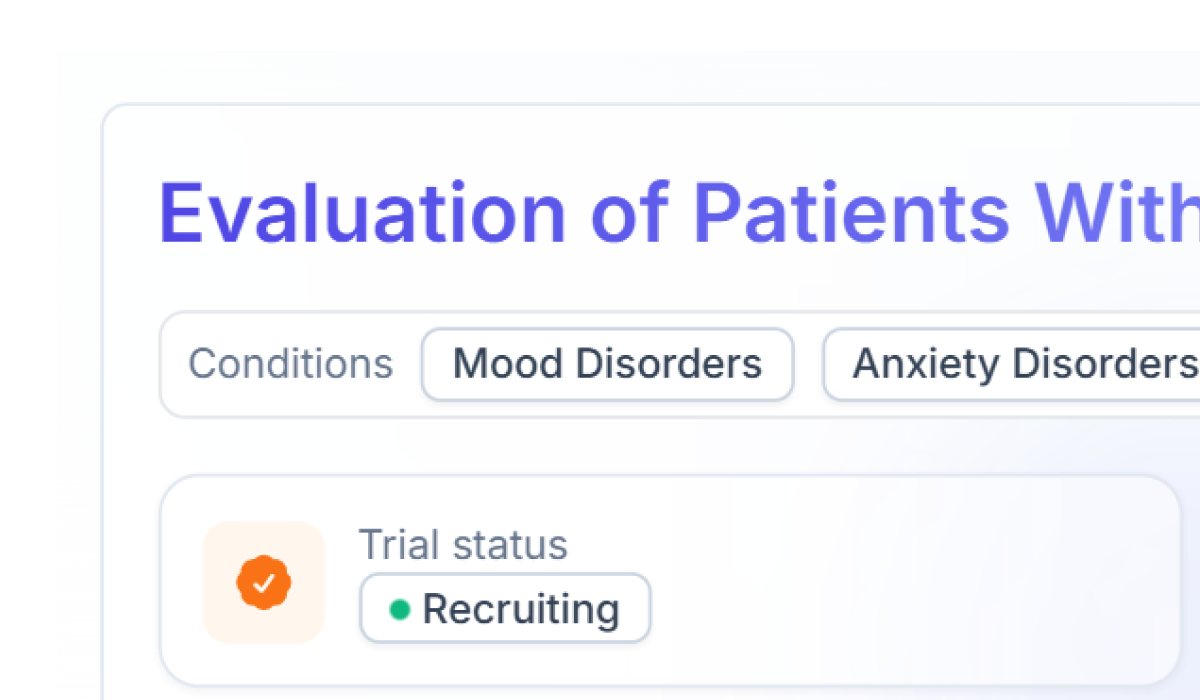
Browse trials that look relevant to you and see the key details in one place.
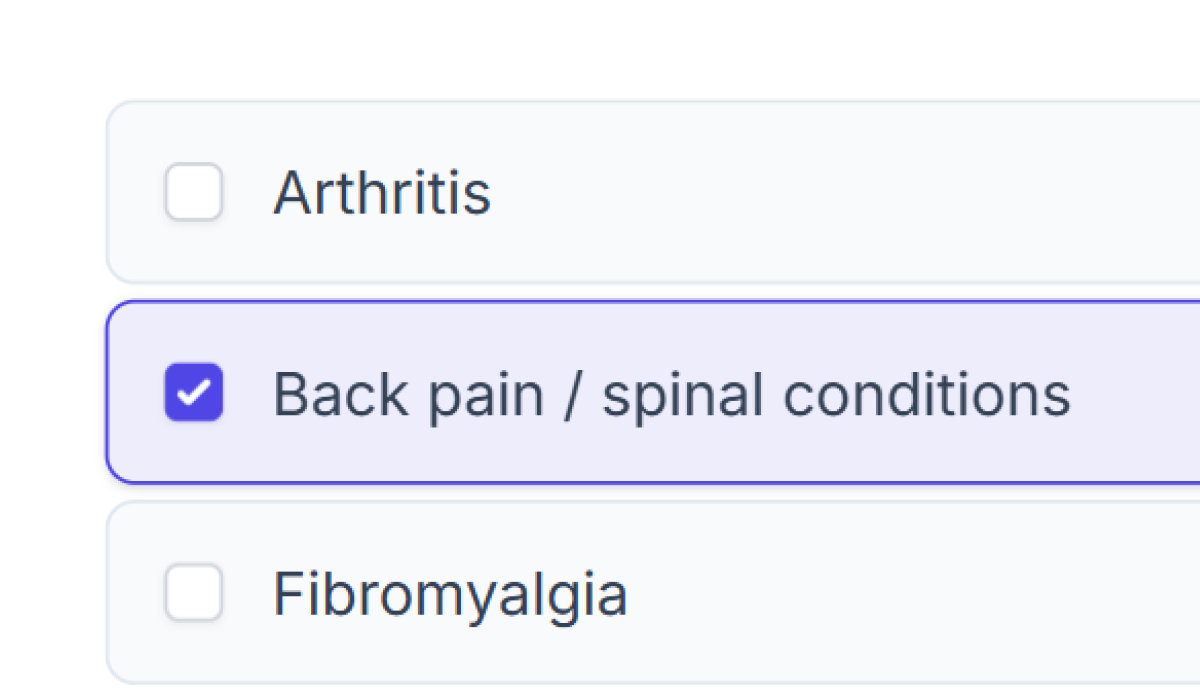
Answer a few questions so we can check whether it may be relevant for you.
If you may be a potential match, our team will contact you within 2 business days.
Check eligibility, trial status, phase, locations and sponsor information in one place before deciding whether a trial may be relevant.
See the main requirements listed for a trial, including age, biological sex and health-related criteria where available.
Check whether a trial is recruiting, completed or not yet recruiting, and see where it is in the research process.
Review listed trial sites and locations before deciding whether a trial may be relevant.
See sponsor information, trial design, treatment groups and other available details in one place.
Answers to common questions about clinical trials, eligibility and what happens after you register your interest.
A clinical trial is a research study that tests new ways to prevent, diagnose, or treat diseases in people. It may involve new medicines, medical devices, or different approaches to care. Clinical trials are carefully designed and monitored to make sure they are as safe as possible and to find out what works best. People who take part help advance medical knowledge and may gain access to new treatments.
No. Registering your interest is just the first step. The medical team will review your details to see if the trial might be suitable for you.
You may be asked a few questions about your health and medical history. If the trial could be a good match, the team will review your information and contact you to explain the next steps.
Yes. The requirements can sometimes be difficult to understand. You can still register your interest, and the medical team will help determine whether the trial may be suitable for you.
The phase shows the stage of the research. Early phases focus more on safety, while later phases include more participants and look at how well a treatment works compared to existing options.
In some clinical trials, participants are randomly assigned to different groups (also called randomized clinical trials). Each group may receive a different treatment or, in some cases, a placebo (a treatment with no active ingredient). This helps researchers compare results fairly and understand how well a treatment works.
No. Some trials may be recruiting, while others may have finished, paused or not yet started recruiting. The trial status can help you understand where a trial is in the process.
Trial information depends on what has been published for that trial. Some trials may not list every detail, such as full locations, dates, eligibility criteria or sponsor information.
Search by condition and review trials that may be relevant before registering your interest.